Project Case Studies
A collection of completed Mechanical Engineering, Industrial Design & Product Development Projects
Presence in Motion
Not a frame rolling on two wheels, but a living human
Bicycle lights are not a new concept. While the bicycle industry continues to innovate with blindingly bright, longer-lasting, more compact units, cycling fatalities in Australia have remained steady at around 37 deaths a year. This figure has not decreased for the last two decades.
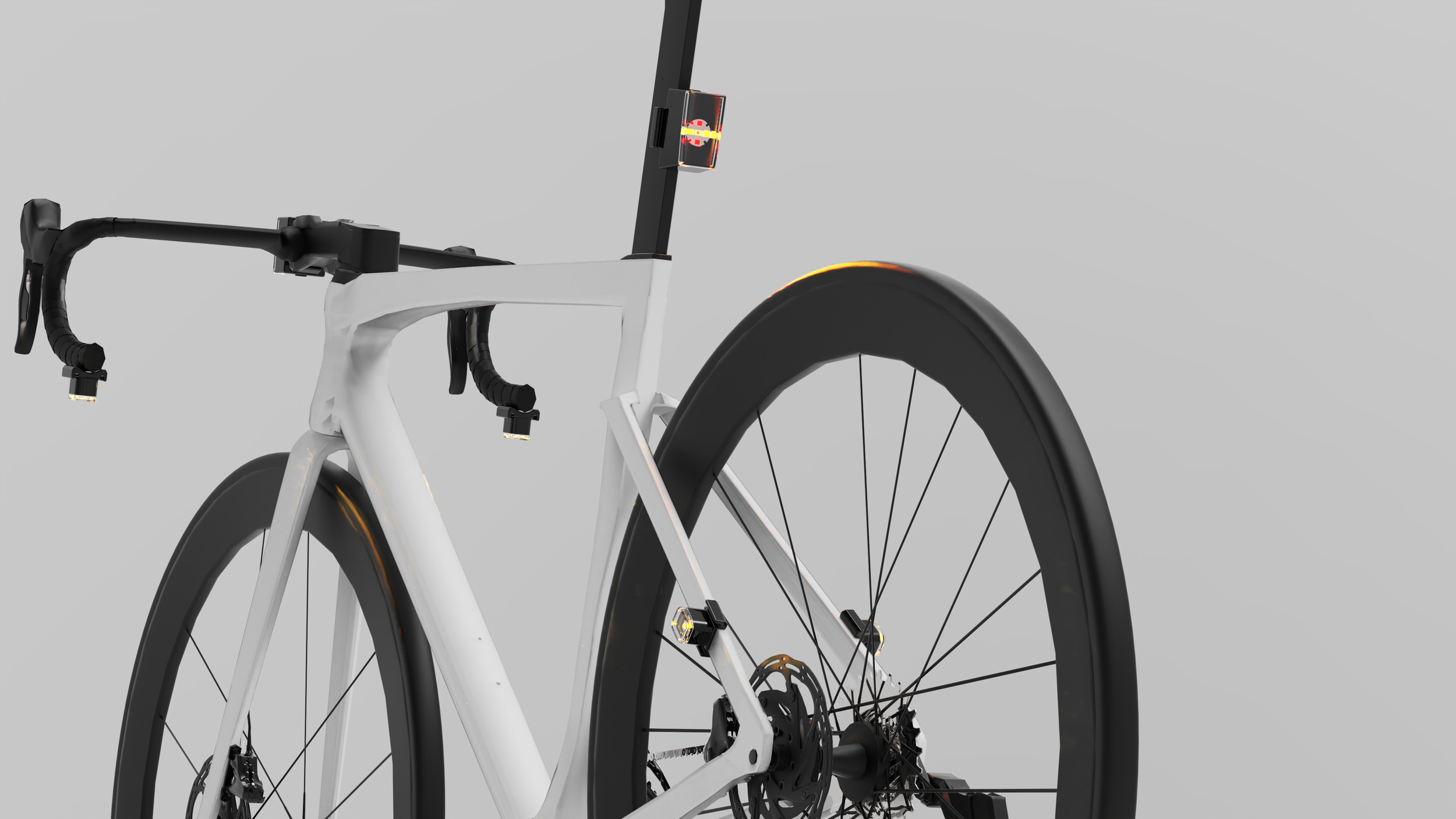
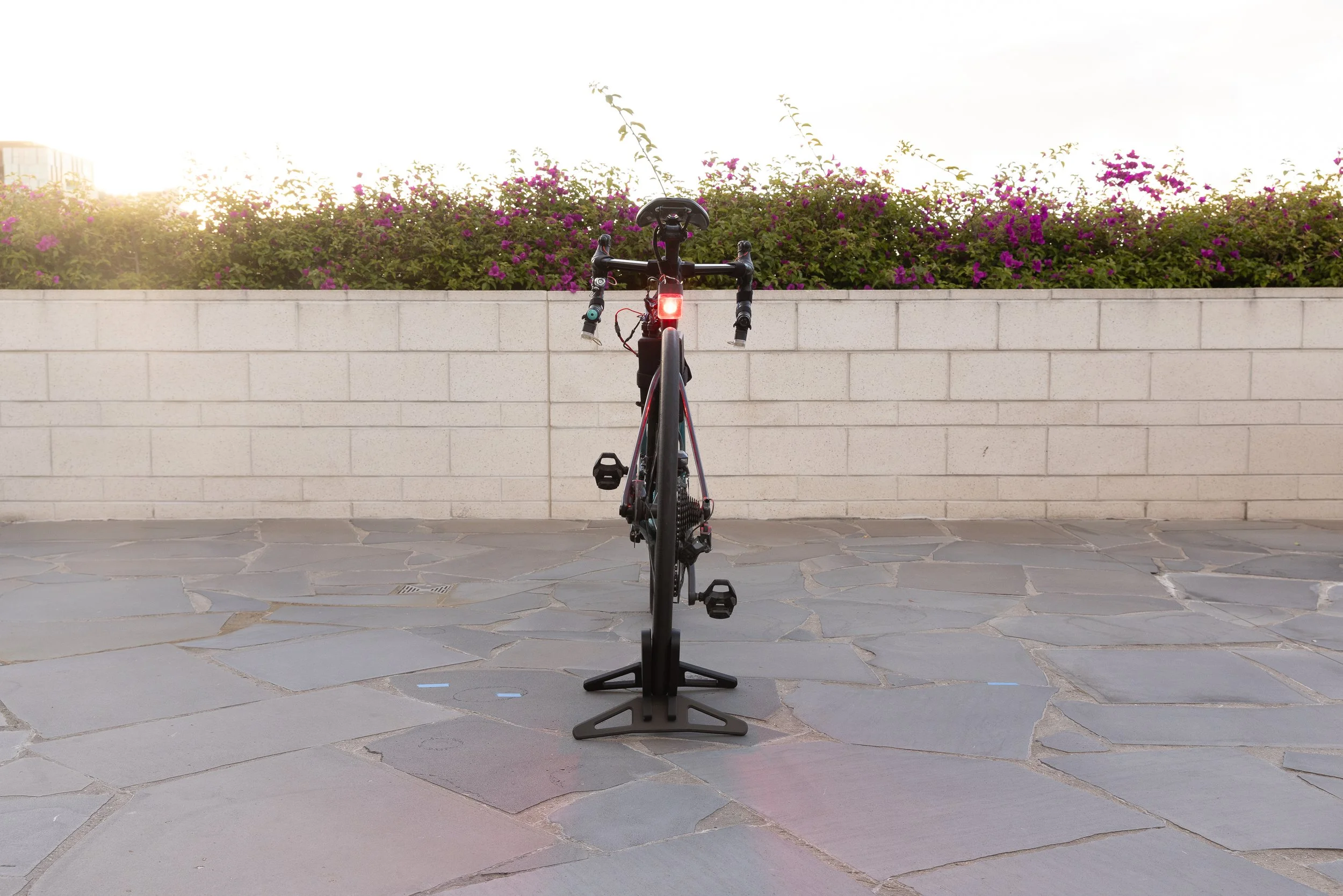
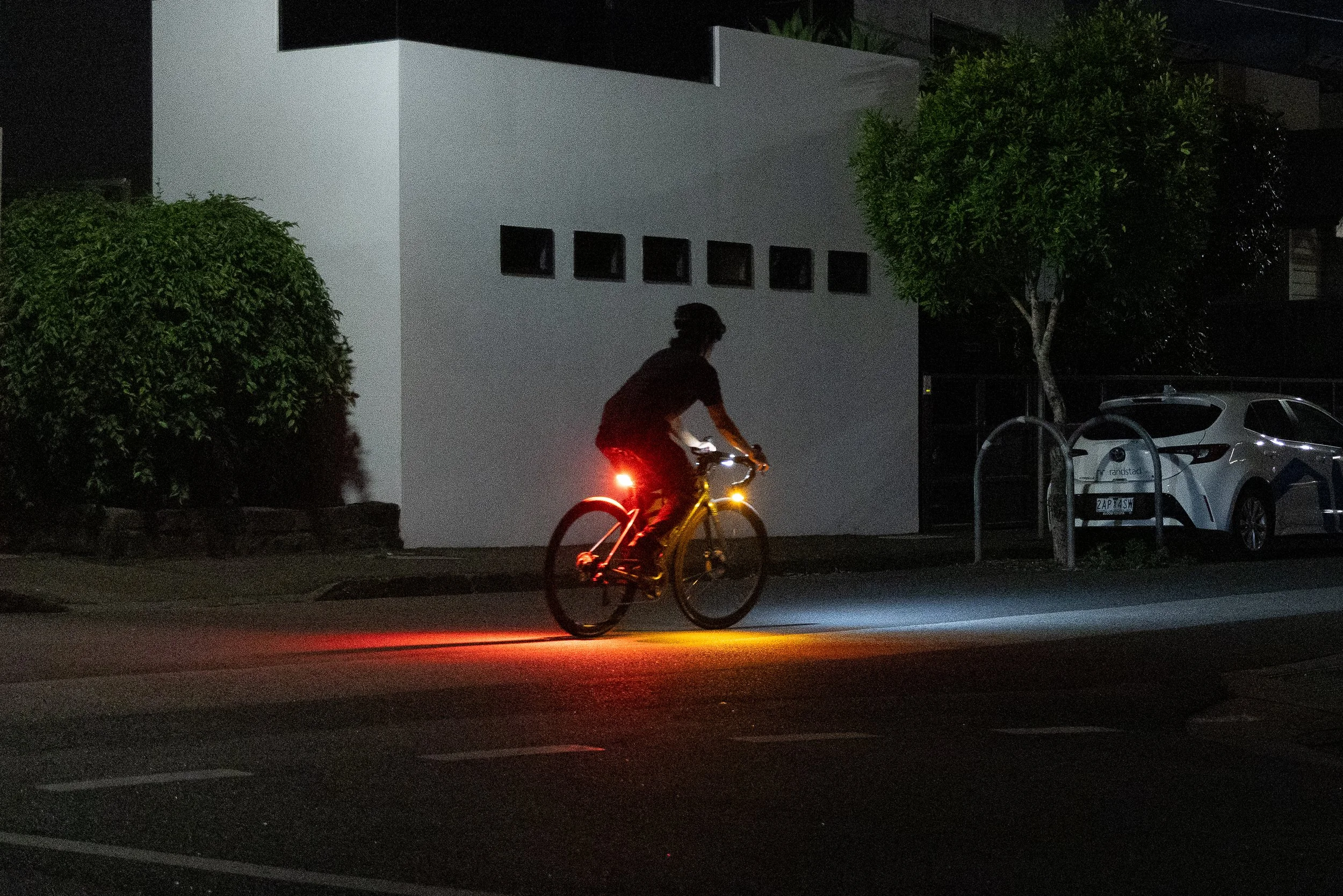
Presence in Motion aims to redefine cyclist safety by making cyclists more conspicuous to other road users. Utilising principals of Biomotion (Initially inspired by Melbourne-based Project Flock) illuminating a living being’s natural joint motion enables them to be recognised 5.5x faster in low light conditions than a single point of light.
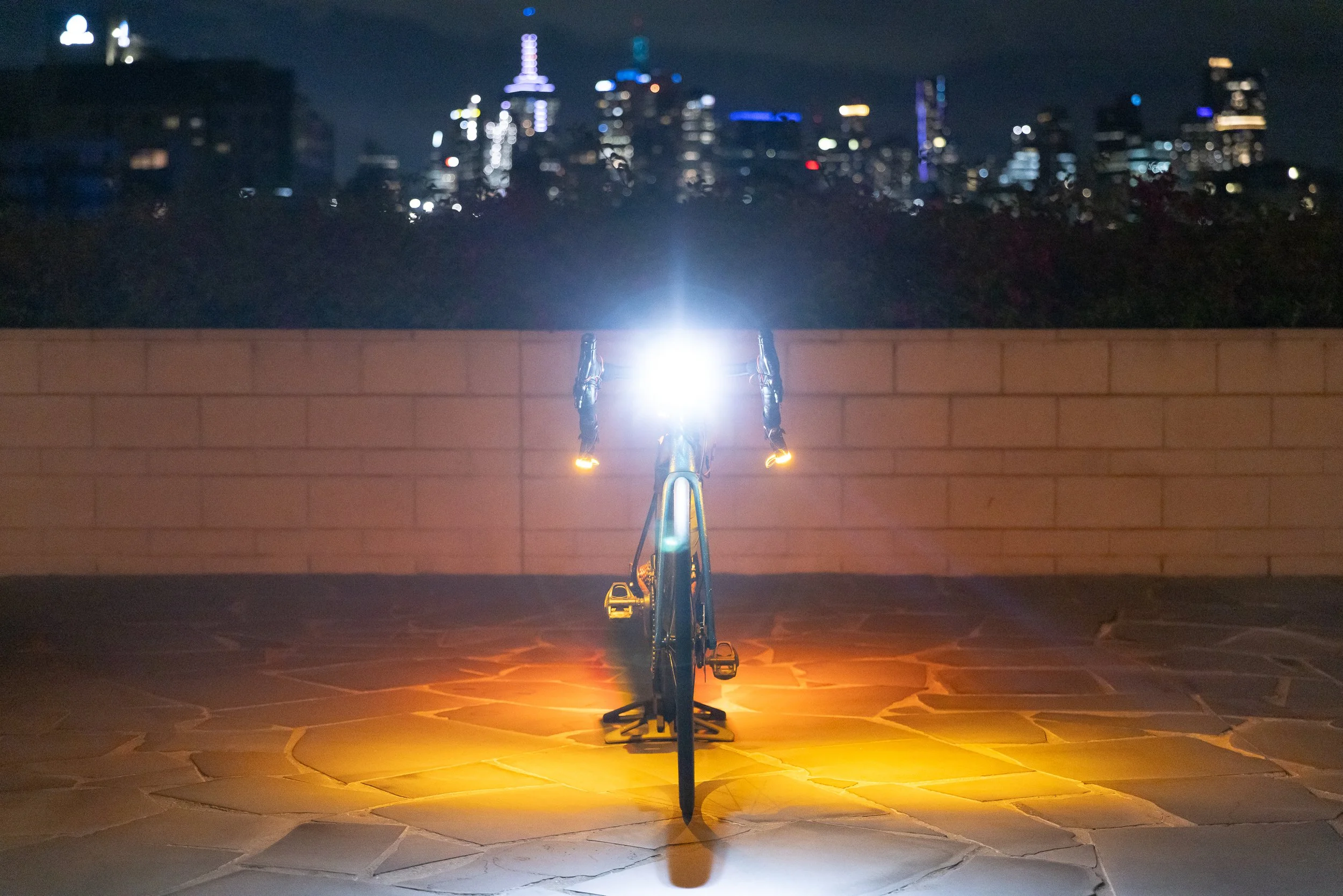
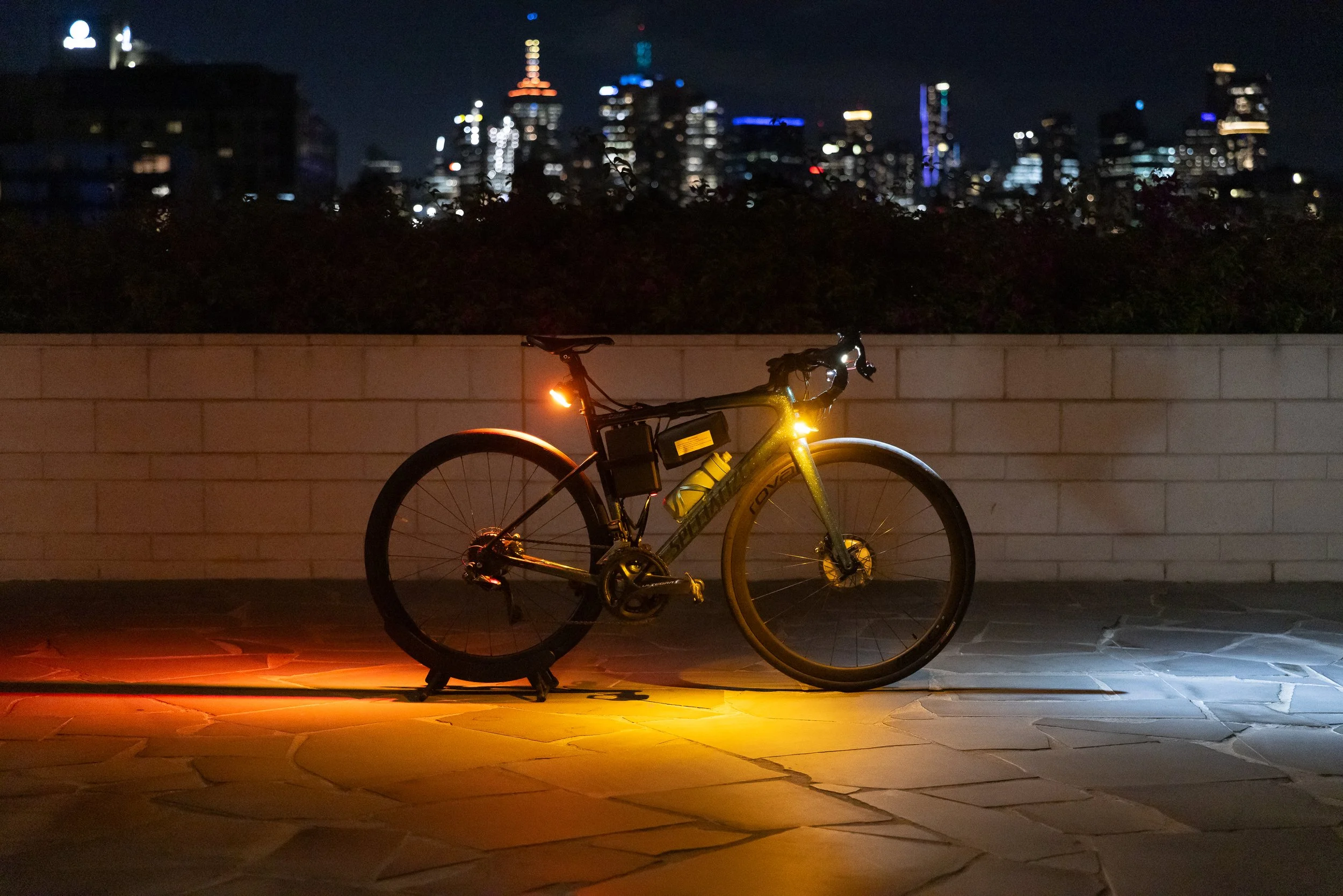
Presence in Motion explores a fully functioning illuminated rider safety system that makes a rider’s presence known by humanising them, both day and night. The system clearly shows rider intention with indicating and braking lights controlled by the rider’s fingers, eliminating the need to take hands off bars to alert other road users. When activated, the system illuminates not only the rider’s body but projects a designated safe zone on the ground for vehicles who are oncoming, following or overtaking.
Presence in Motion was presented with a Dean’s Award (Technology Category) in the RMIT MDIT programme. Special thanks to Cutter Electronics, Project Flock and Jaycar.
Project Date - Completed Q3/Q4 2025 and ongoing in development
Mechanical & Product Design
End-to-end 3D Design and CAD Modelling
Prototyping - FDM and MSLA Resin 3D Printing
Metal fabrication - Heatsink & Thermal Management
Electrical & Electronics Design
Arduino - Programming & Full Hardware Build
Solid State High-Power LED Lighting & Circuit Design
LED Optics & Beam Cast
Circuit Actuation & Control
Portable Power Supply & Cable Looming
Periodicity
Sustainable Product Packaging Unfolded
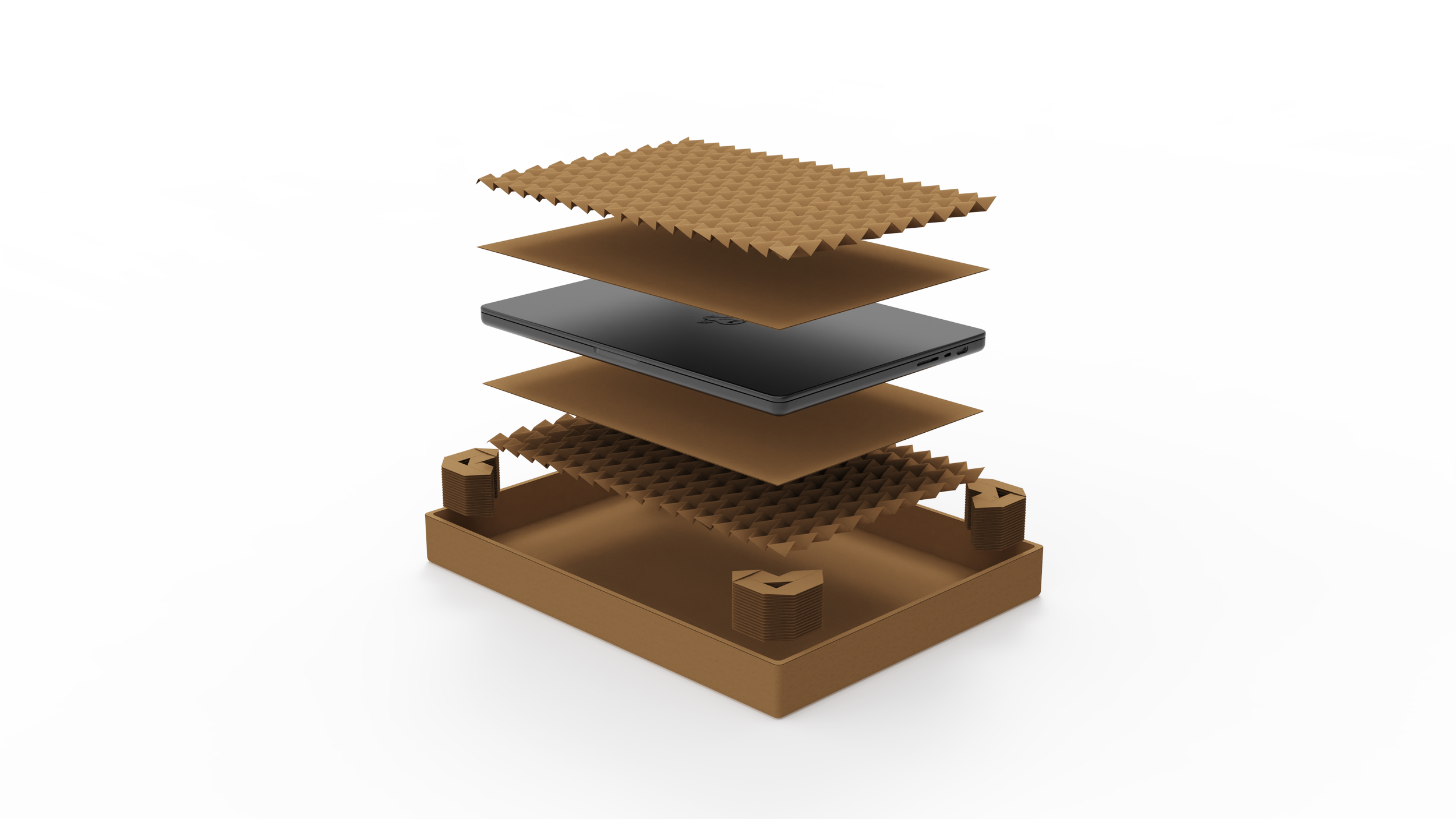
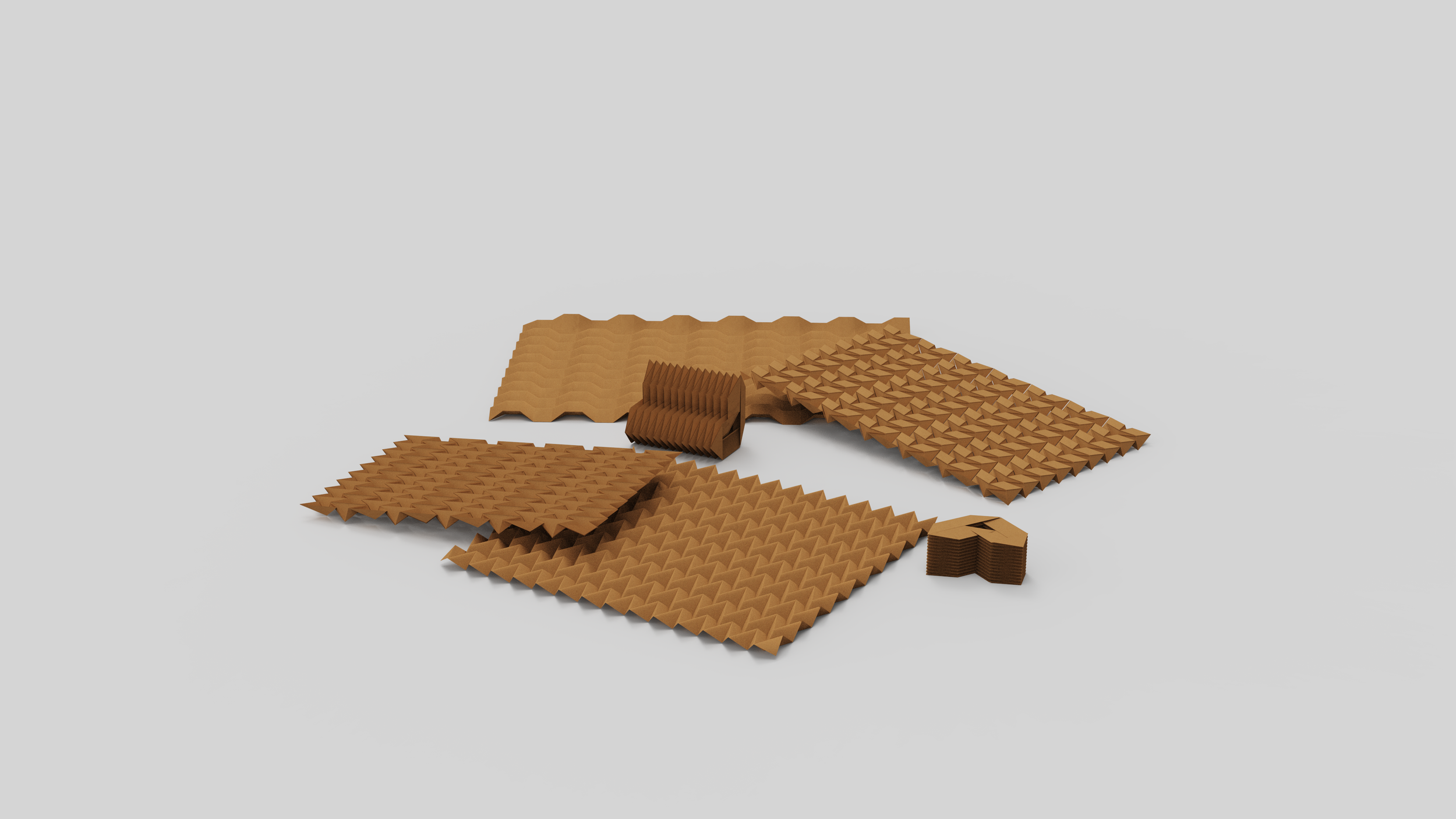
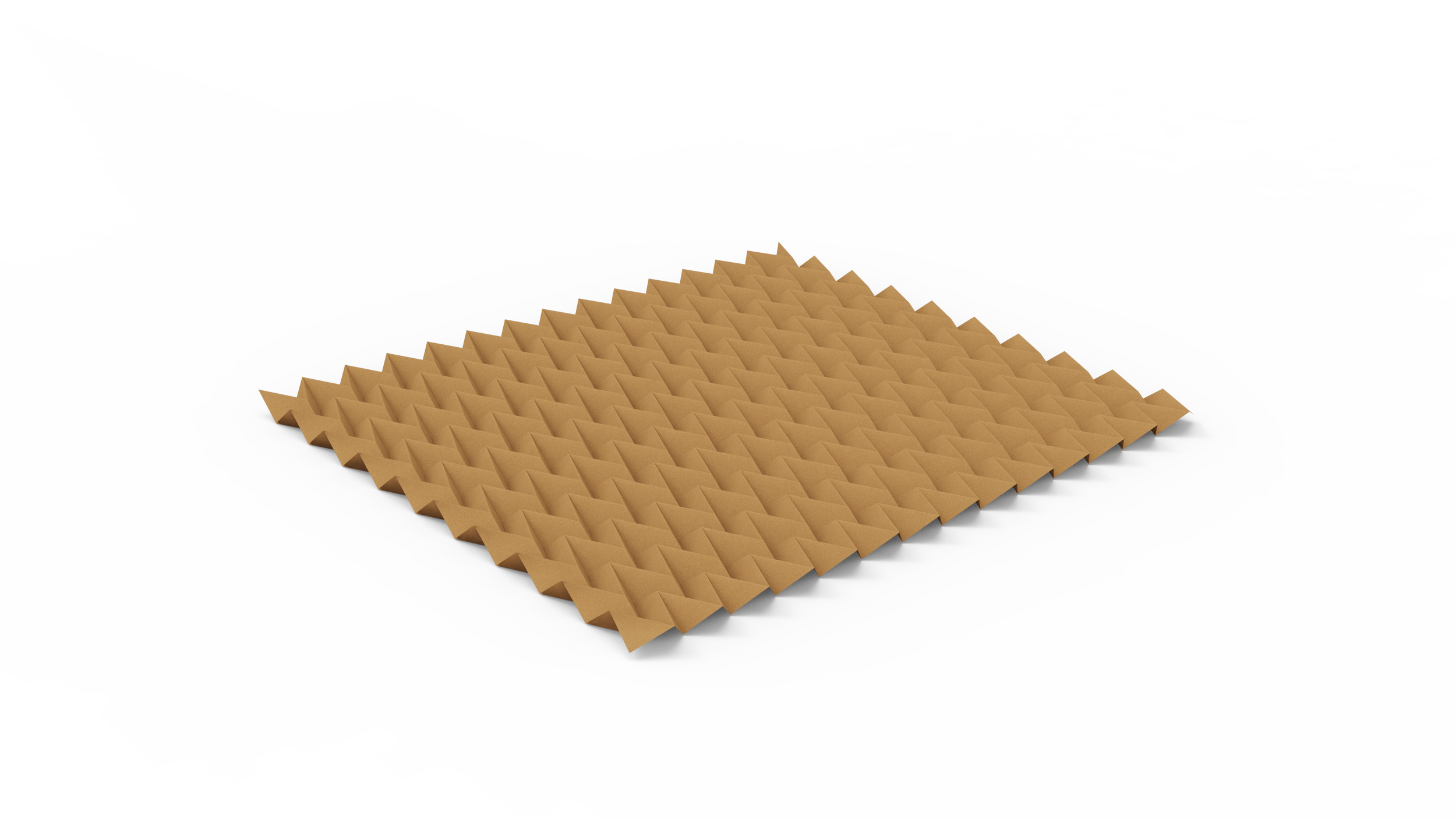
Periodicity reimagines the future of circular product packaging for everyday products through traditional paperfolding techniques. The name ‘Periodicity’ was inspired by the tessellating, repeating intervals of folds formed in Origami patterns.
By utilising the mysterious strength and flexibility unlocked from folding a single flat sheet of material, we developed a dynamic packaging system as a replacement for problematic, difficult-to-recover plastic-based materials such as Expanded Polystyrene and other polymer-based packing foams.
In proof-of-concept testing, an origami padding design formed from a single sheet of 120GSM A3 paper was able to support a uniformly distributed load of 70kg under controlled conditions without crushing at fold corners or deforming.
Periodicity presents the potential for an affordable, lightweight, adaptable, easy-to-recover protective packaging for a wide variety of products whilst adding curiosity and wonder to the packaging experience.
Project Date - Completed Q3/Q4 2024
Mechanical & Product Design (Packaging)
Packaging Dieline & Fold Design
Dynamic and parametric folding simulation
Computer Numerical Control (CNC) fabrication
Product Stress Testing & Analysis
Float
The Floor is Lava
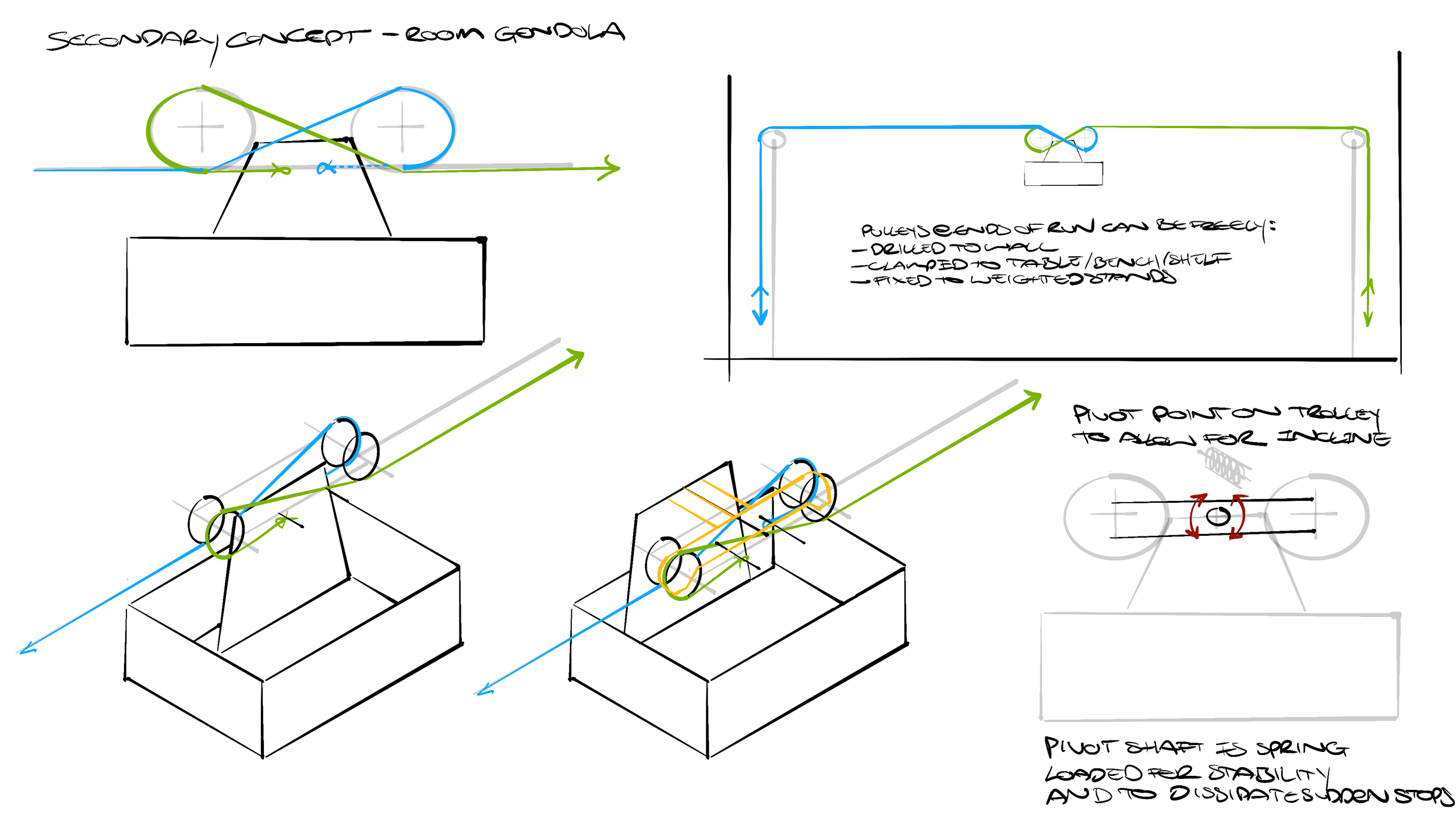
Living in a society where we all wanted to grow up far too quickly and in an age of entrapment with our screens and mobile devices, we often forget the importance of play and imagination. As kids, my sister and I loved building flying foxes and gondolas for our soft toys to traverse terrain too treacherous to pass through by ground.
Empowered by the same fascination that has made me a career engineer, I would create working mechanical systems using dad’s tools and objects around the house. Sometimes these contraptions worked marvellously, other times they’d fall off the wall and I’d be back at square one. It was the many hours building these circuits, along with model railroads, racetracks, and ball runs that taught me how to turn gravity and stored energy into extensions of play with the toys around the room.
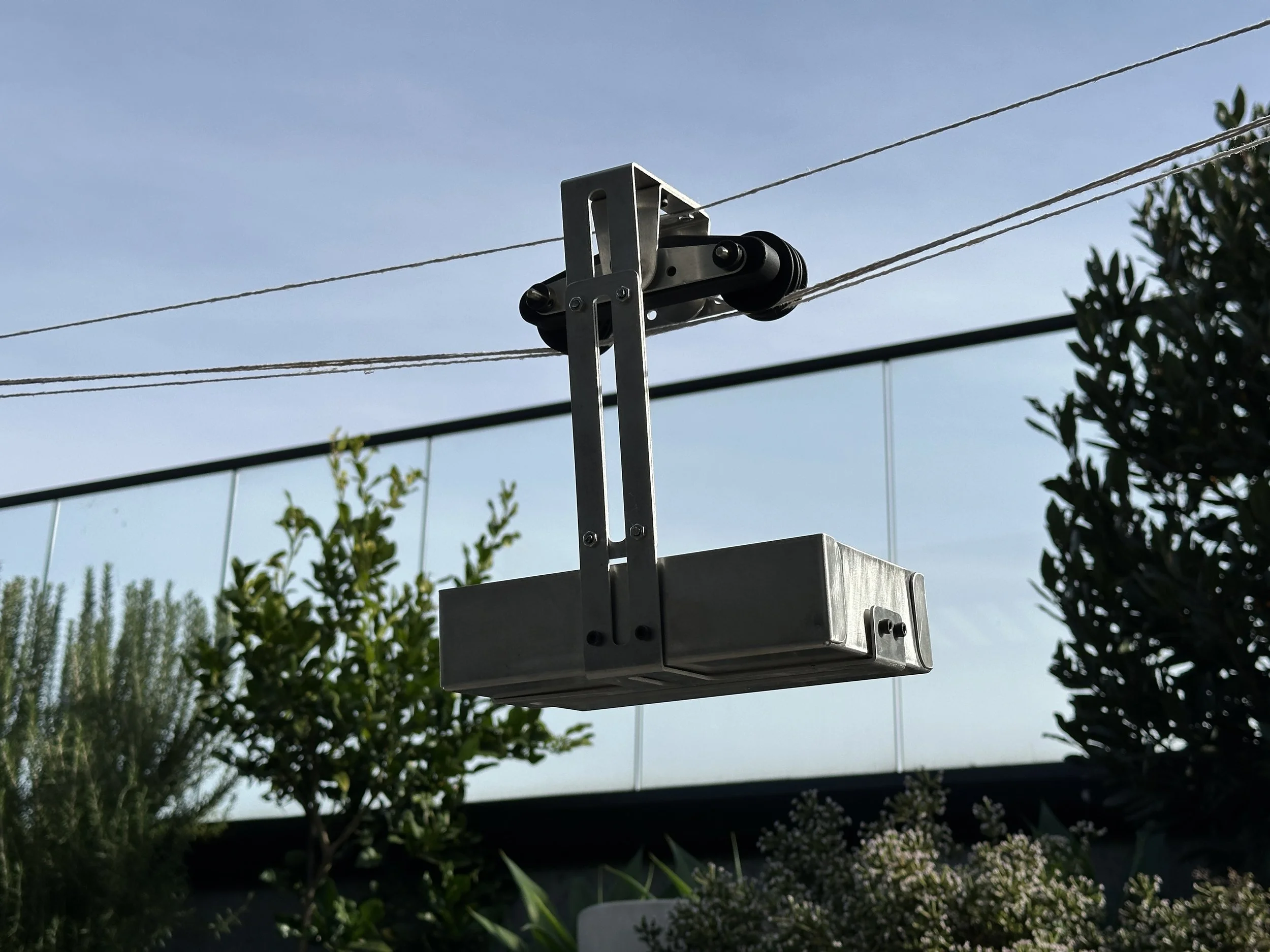
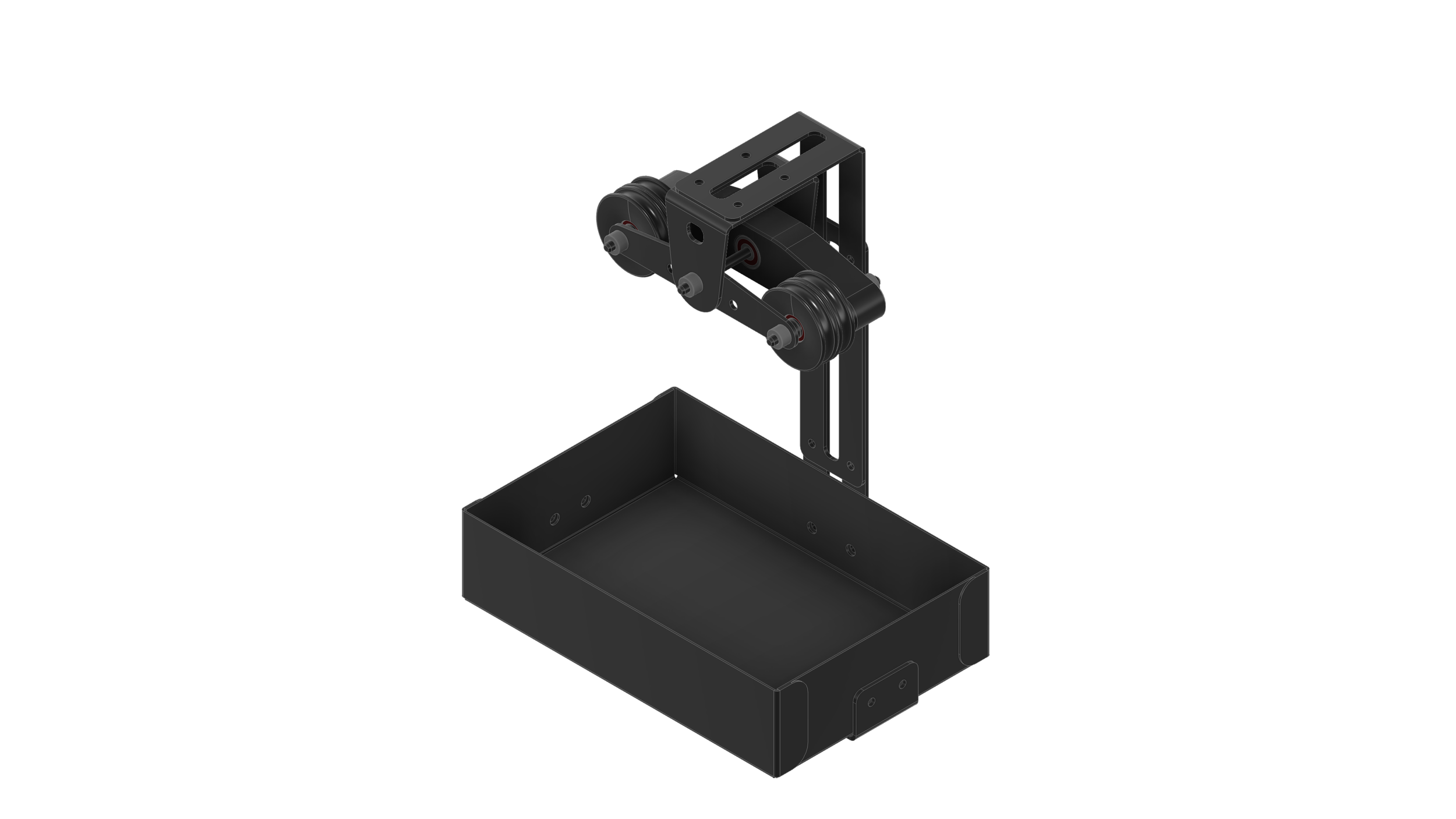
Float is an at-home cable car pulley system for curious children and adults alike. A minimal, universally-compatible toy made from lightweight aluminium and wood, Float provides an undiscriminating play experience that isn’t reliant on brand, scale or play systems, enabling infinite compatibility with other toys. Whether providing kids with an alternative to flying objects through the air by hand, or giving adults a fun way to send mail up the driveway, Float makes learning about problem-solving and physics a fun and carefree experience. With a standard range of durable pulleys, cranks, and mounting hardware, all the user needs is rope and their brightest ideas.
Project Date - Completed Q1/Q2 2025
Mechanical & Product Design (Toys)
End-to-end 3D Design and CAD Modelling
Prototyping - MSLA Resin 3D Printing
Metal fabrication - CNC, Hydraulic Forming/Bending & Hand Finishing
Material Selection, Geometry, Fits & Tolerances for Dynamic Load Applications
Fixery
Some of the best things we can own are the things we already have
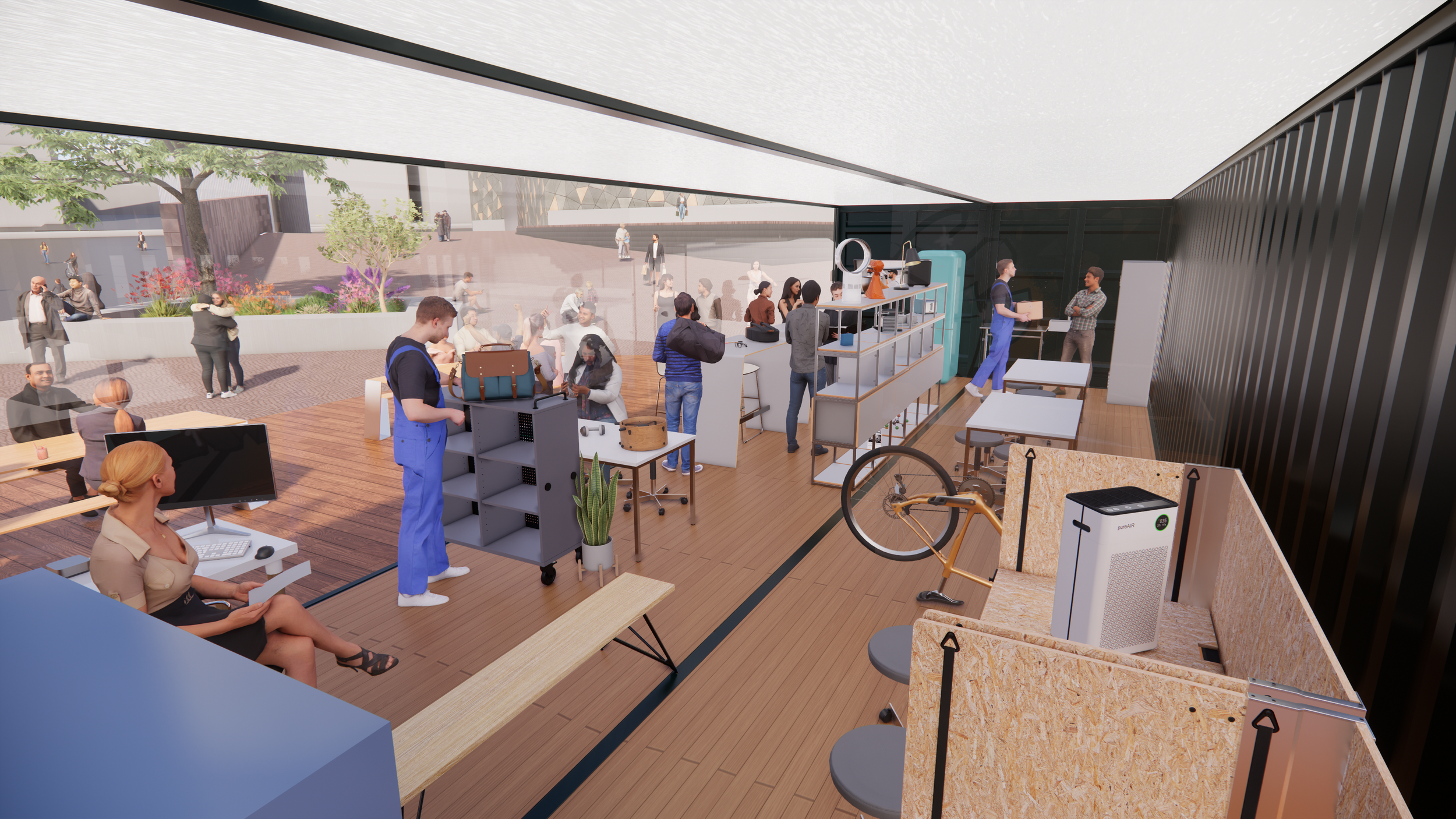
‘The Fixery’ is an answer to the growing problem of lost value, energy and resources in products thrown away at the end of their working lifecycle. The project’s mission is show everyday people the power of what we already own, extending the lifespans of our belongings and helping people to understand the power of repair. To provide realistic avenues for prolonging the life of our things and keeping them in circulation.
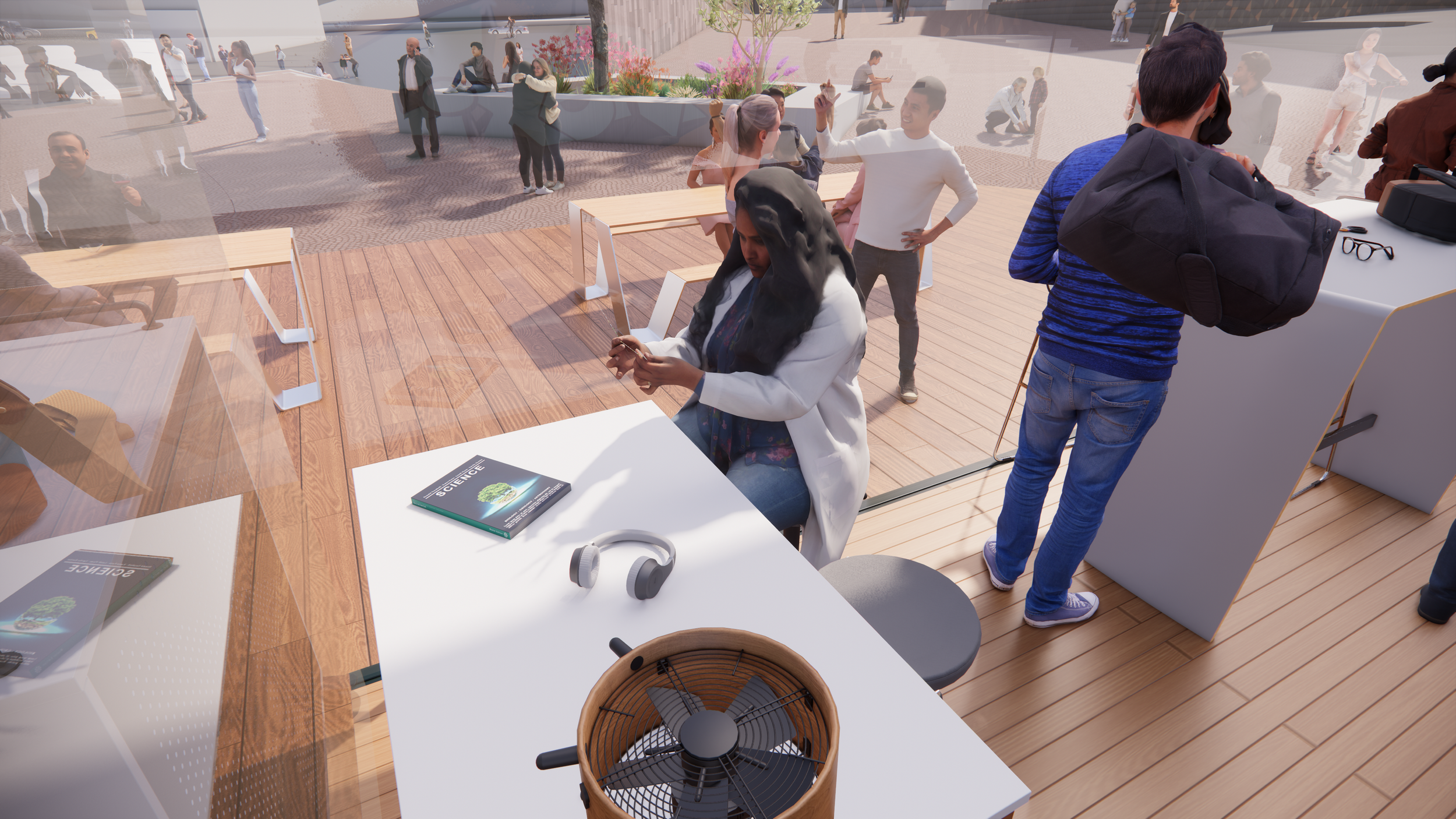
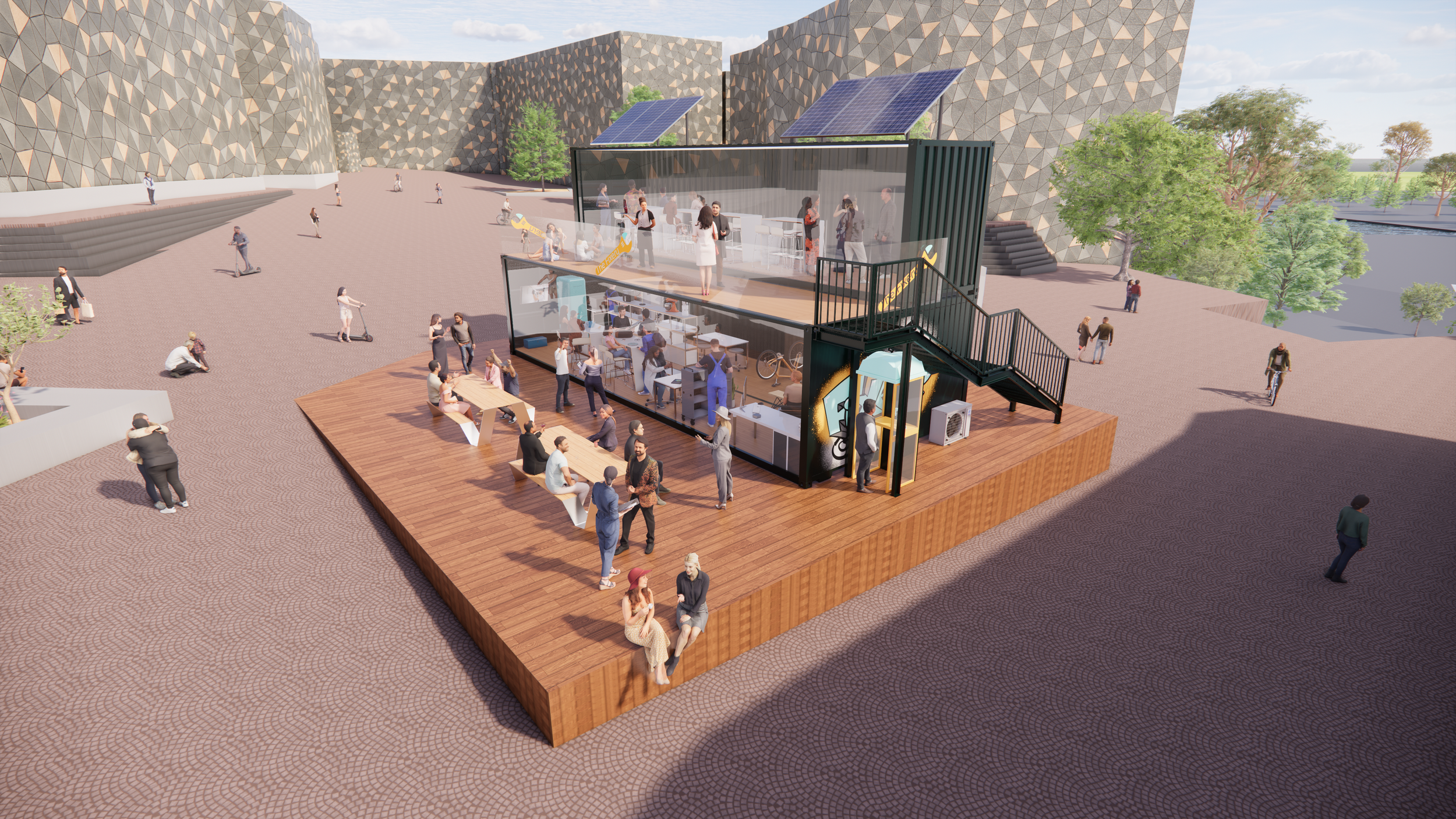
Consumerism has taught us that Instead of repairing, we are conditioned to discard and replace items that no longer serve their purpose. Barriers to repair include inaccessibility, inconvenience, prohibitive costs or lack of tools, materials or knowledge. The Fixery provides a network of city-wide community repair centres and collection points. Within each Fixery hub is a team of technical repair specialists, libraries of tools, as well as caches of standard and ordered parts. The renders pictured imagine a Fixery Hub in Federation Square, servicing the Yarra-riverside of Melbourne’s CBD.
Fixery Hubs built from repurposed shipping containers serve as a home base for manufacturer-certified repair services, self-service tool workshops, and centres for education, career pathways in repair and social events. The Fixery aspires not to exist off the backs of volunteering and charity, but goes hand in hand with government policy-based ‘Right to Repair’ shifts in regions such as Australia, The EU, and The USA. Success will be reliant on policy change, funding and scaling from government and stewardship from manufacturing industries.
Project Date - Completed Q1/Q2 2025
Service Design - Product Circularity & Social Impact
Circular Economy, product Stewardship & Sustainable Design
The Right to Repair, Consumer & Goods Legislation
Consumer Psychology & Behaviour Change
Spatial Design & Visualisation
Modelmaking - 3D Printing & CNC Fabrication